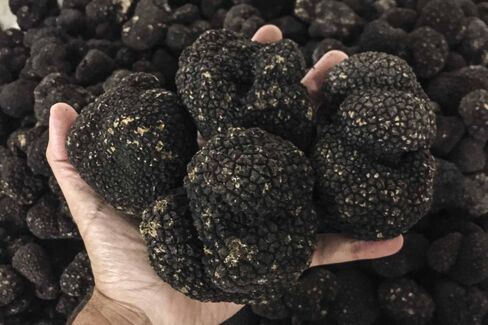
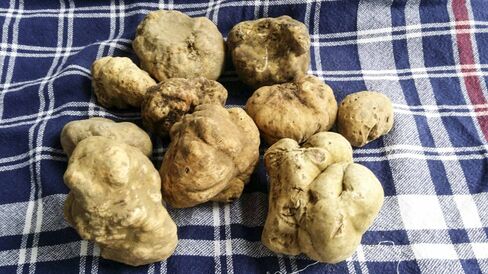
Ian Purkayastha fits none of those descriptions. The good-looking, dark-haired, dark-eyed founder of Regalis Foods looks like someone you might recognize from the back of the class in business school: quiet and focused until the moment he finds the subject that lights them up. In Purkayasthas case, its luxury ingredients. Besides fresh black and white truffles, he sells caviar, elite mushrooms, and seafood such as live sea urchin. His company works with more than 300 of the top chefs around the country, including Eric Ripert and David Chang, and it generates upwards of $5 million in annual sales, sourcing and supplying the delights at a level other wholesalers can't provide. And he's 24 years old.
Purkayastha first got enticed by the luxury mushroom world when he was 14 and went on a mushroom-foraging expedition with an uncle in Arkansas. Soon thereafter, he ate a dish of black truffle ravioli with foie gras sauce at a restaurant and became singularly obsessed. He begged his parents to finance his appetite for truffles; he wanted to recreate that dish. They said: "No way." (They'd moved from Texas to Arkansas to pursue a simpler life.) So Purkayastha pooled savings from past birthdays and Christmases and, on EBay France, found a small company in Provence that was willing to ship him a kilogram worth of summer truffles. He then went to the three best restaurants in Fayetteville, Ark., with an invoice book and a small scale. He made $600 from his $100 investment and kept the broken truffle pieces to cook with. He was 15.
Purkayastha has traded truffles for a $20,000 IWC watch.
Source: Ian Purkayastha
Since then, Purkayastha has established himself as not only a top salesman of the coveted mushroom but an ingenious one. He loves bartering: His top score was trading a box of truffles for a $20,000 IWC watch in the Caribbean; on a more functional level, hes also traded truffles for a Restoration Hardware couch. The guy is intrepid. Recently, when a shipment to Alinea in Chicago was delayed, he prepared to board a plane at the last minute to hand-deliver black truffles. They need them for a Thomas Keller dinner tomorrow night, Purkayastha frantically e-mailed me, canceling a meeting. (The truffles made it on their own.) He's also just co-authored a memoir. Truffle Boy will come out in February. And he's teamed up with Williams-Sonoma to sell his amazing truffle salt, oil and butter.
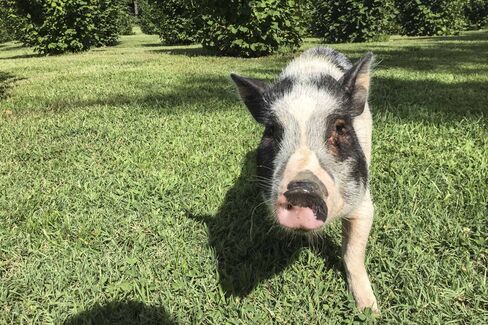
Be careful of truffle pigs: They bite.
Source: Ian Purkayastha
Perhaps most exciting for the umami-lover is the fact that Purkayastha has a new source for black winter truffles: his own farm. Six years ago, his neighborsupportive of his truffle businessgave him an acre of land in the Fayetteville area to start producing truffles. Purkayastha planted hazelnut (or filbert, if you're in the U.K.) trees and is getting ready to start harvesting truffles. In anticipation, hes bought a truffle dog, Marla, that hes training. Pigs are definitely not the preferred choice any longer, because theyre difficult to control, he said. People were losing fingers trying to pry truffles out of pigs mouths.
American truffles may sound unorthodox, but Purkayastha noted that a truffle orchard in Tennessee has had major success. (Its currently affected by blight.) In its best year, the orchard produced 250 pounds of black trufflesretail price: $900 per pound. "Not bad," he said.
If the truffle farm doesn't work out, you can always buy truffles at the Regalis Foods website.
Source: Ian Purkayastha
You can start your own black truffle farm, Purkayastha advises. He has a few tips, and he's passed them along. If that doesn't work, Italian white truffles currently start at $230 on the Regalis food site.
Ian Purkayasthas Recipe for a Truffle Farm
Find a plot of land in a temperate climate thats not too warm but also not susceptible to bitter cold. Look for pasture property without trees; land with existing trees might have foreign contaminants that will damage the trees youre planting.
Add approximately 20 tons of lime per acre of land. Till about three feet into the soil. Your goal is to raise the ph to about 7.9the optimal soil conditions for growing the winter black truffle known as tuber melanosporum in Europe.
Take approximately 150 one-foot hazelnut tree or oak tree saplings and dip the root system of each in a big batch of black truffle puree to inoculate and colonize the roots. (You can plant 150 saplings on one acre.)
Plant the hazelnut or oak tree saplings in the soil, allowing space between them. Hazelnut trees will grow faster and presumably, produce truffles sooner; theyll also die sooner. Oak trees take 10 to 12 years to mature, but they will last longer.
Let stand for a minimum of five years; check water and irrigation regularly. Hazelnut saplings should grow to at least six feet high. Look for animal holes around the trees, a sign that local rodents are hunting somethingtruffles!that's growing in the ground. For oak trees, allow an additional three to five years.